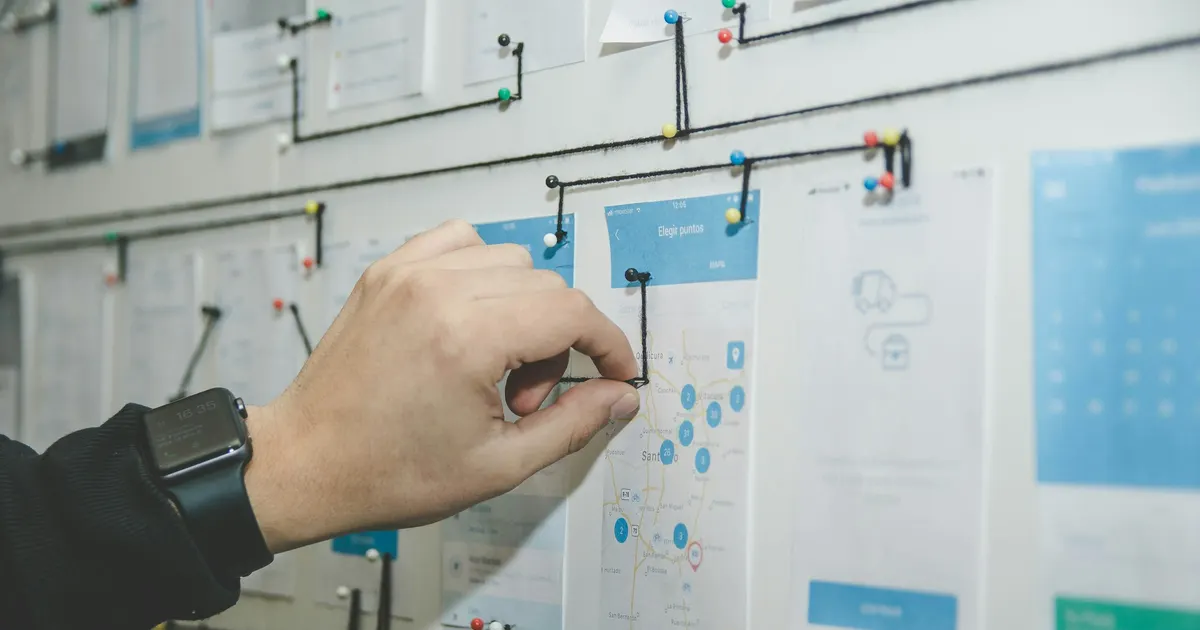
What is a discovery phase?
A discovery phase is a short, focused engagement — typically two to six weeks — that turns an idea into a validated plan before development starts. A small team, usually a business analyst, a solution architect and a designer, works with your stakeholders to define what will be built, why, and how.
It is not paperwork for its own sake. Its purpose is to find the expensive misunderstandings while they still cost an afternoon of discussion instead of a month of rework.
What happens during discovery
- Kick-off and stakeholder interviews to understand goals, users and constraints.
- Process mapping of the current situation and the target workflows.
- Requirements written as user stories with acceptance criteria.
- Architecture options, integration analysis and technology recommendations.
- UX wireframes and a clickable prototype of the key flows, tested with real users where possible.
- Estimation, release planning and a risk register.
What you should receive at the end
- A product vision and measurable success criteria.
- A prioritized backlog with an agreed MVP scope.
- An architecture document with integration map and hosting approach.
- A clickable prototype of the main user journeys.
- A development estimate, timeline and recommended team composition.
- A list of risks, assumptions and open questions with owners.
These deliverables belong to you. A good partner will make sure they are clear enough to hand to any competent development team.
When you can skip it
Discovery is not always necessary. If you already have a detailed specification, designs and a clear integration picture — or the project is small and low-risk — you can start development directly with a short planning sprint instead.
As a rule, the more novel the product, the more stakeholders involved and the more systems it touches, the more value a discovery phase delivers.
Common mistakes to avoid
- Treating discovery as a sales formality and skipping user research.
- Letting the prototype become a pixel-perfect design project instead of a validation tool.
- Writing requirements that describe solutions rather than problems.
- Ignoring non-functional requirements until development is underway.
- Not deciding what is out of scope.
Frequently asked questions
How long does discovery take?
Two to six weeks for most products, depending on complexity, number of stakeholders and integrations.
Is the estimate after discovery binding?
It can be the basis for a fixed-price contract for the defined scope, or a reliable budget for a time-and-material engagement.
Can discovery be done remotely?
Yes. Workshops, interviews and prototype testing all work well remotely with the right tools.